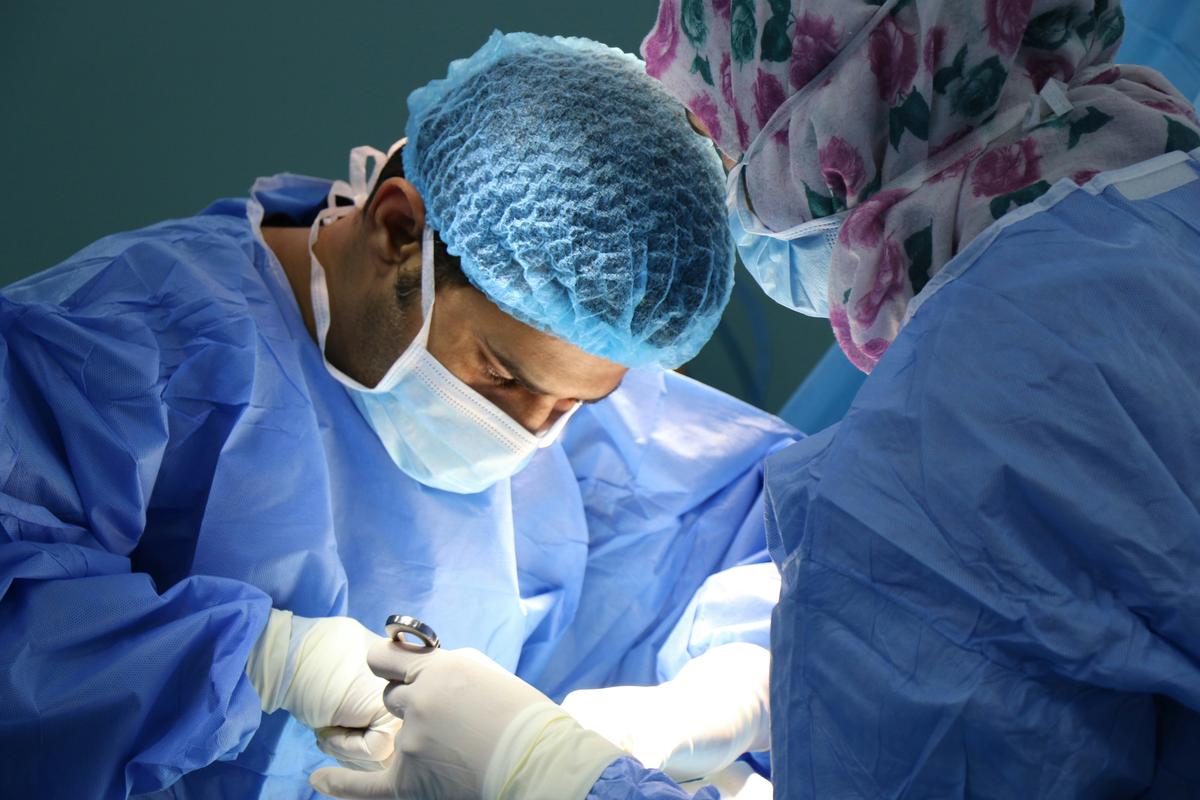
Walk into a major spinal surgery center in Seoul today and you may not see the large incision you expect. Instead, you will see two punctures—each smaller than a keyhole—and a high-definition monitor showing the surgeon's instruments navigating the spinal canal with millimeter precision. This is Unilateral Biportal Endoscopy (UBE), and it is rapidly becoming the default decompression technique in East Asia. The question is not whether this technique will spread—it is whether Southeast Asian hospitals are building the training infrastructure fast enough to keep pace.
The Bottleneck That Shaped Endoscopic Spine Surgery
For years, minimally invasive spine surgery faced a fundamental engineering problem. Traditional uniportal endoscopy, which uses a single channel for both the camera and surgical instruments, imposes tight spatial constraints on the surgeon. The instruments must be passed through the same entry point as the endoscope, limiting both the angle of approach and the type of tools that can be used. Surgeons working through a uniportal system rely on specialized, narrow-diameter instruments—a constraint that, according to several spine surgeons interviewed for this report, limits the complexity of procedures that can be performed.
The UBE approach resolves this by introducing a second portal. Through two small, independent incisions on the same side of the spine, the surgeon separates the vision and work channels entirely. The viewing portal houses a high-definition endoscope while saline continuously irrigates the field, keeping neural structures clearly visible. The working portal accommodates standard open-surgery instruments—drills, curettes, kerisons—giving the surgeon the same mechanical freedom they would have in an open procedure.
The clinical result, as described in published surgical technique papers from South Korean centers (Kim et al., 2019), is deceptively simple: the visualization of an endoscope combined with the instrument maneuverability of open surgery. What makes this significant is not the technical elegance but the downstream consequences for patients.
Why UBE Is Winning at the Clinical Level
Three clinical outcomes are driving adoption. First, post-operative pain is substantially reduced. Traditional open decompression requires stripping paraspinal muscles from the bone—a process that causes significant soft tissue trauma and post-operative pain. UBE splits the muscles rather than stripping them, preserving the posterior tension band. Published clinical data from a 2021 retrospective cohort study in Seoul comparing UBE to microdiscectomy showed significantly shorter hospital stays and lower post-operative opioid consumption in the UBE group (Kim et al., 2021).
Second, the continuous saline irrigation during UBE procedures is not merely a visualization aid—it serves an infection control function. The constant fluid flow washes out bone dust and soft tissue debris that would otherwise sit in the surgical bed, creating a less hospitable environment for bacterial colonization. Published cohorts from Chinese surgical centers have reported favorable post-operative infection profiles compared to traditional microdiscectomy, with the saline irrigation system cited as a contributing factor.
Third, and perhaps most significant for Southeast Asia's aging demographics, UBE can be performed under regional anesthesia. This opens a surgical pathway for elderly patients with severe cardiopulmonary comorbidities who are not candidates for general anesthesia. A 2022 study in European Spine Journal reported the successful use of UBE under epidural anesthesia in patients aged 75–88 with ASA physical status classification III–IV, representing a demographic increasingly prevalent in SEA healthcare systems (Lee et al., 2022).
The Real Barrier: Training, Not Hardware
Here is what makes the UBE adoption challenge different from other surgical technologies: the barrier is not capital cost. Unlike robotic spinal platforms that demand USD 1.5 million or more in hardware, UBE relies on standard endoscopic camera stacks and conventional surgical instruments—equipment already present in most major operating suites across Bangkok, Singapore, and Jakarta.
The bottleneck is training. UBE has a documented steep learning curve. Surgeons must master dual-handed coordination while interpreting a two-dimensional endoscopic image with different depth perception than open surgery. Clinical literature estimates that approximately 30–50 cases are required to achieve basic proficiency, with full competency emerging after 80–100 cases (Choi et al., 2020). For Southeast Asian hospitals accustomed to sending surgeons abroad for short-term observerships, this represents a more substantial training commitment than many have historically been willing to make.
Several Southeast Asian spine centers have begun addressing this gap. Singapore's National University Hospital has incorporated UBE into its spine fellowship curriculum, and at least three major private hospital groups in Bangkok have sent surgical teams for extended training at high-volume Korean centers. But these remain isolated initiatives, not a coordinated regional strategy. For every hospital that has established a UBE training pathway, ten have not.
The Competitive Reality
What is at stake is market share. As patients become increasingly informed through global media and medical tourism channels, the demand for tissue-sparing, rapid-recovery spinal procedures is rising. A hospital that still defaults to open decompression for a one-level lumbar herniation is increasingly difficult to justify to a patient who can find a UBE-capable center with a Google search and a short flight.
The Southeast Asian centers that preemptively establish UBE training pipelines and procurement protocols for endoscopic instrumentation will capture the segment of patients actively seeking advanced spine care. Those that delay risk watching those patients—and the revenue they represent—depart for regional competitors.
Disclaimer: This article provides general industry information and does not constitute regulatory or legal advice. For specific compliance requirements, please consult with our procurement advisory team or relevant national authorities.
Sources: Kim et al. (2019) Neurospine; Kim et al. (2021) World Neurosurg; Lee et al. (2022) Eur Spine J; Choi et al. (2020) J Korean Neurosurg Soc.